Instant PDF download. $37 one-time. 14-day money-back guarantee.
For grown-ups and kids ages 3 to 7
Rainbow music play for ages 3 to 7. Just print.
20 songs, 15 games and ready 10-minute sessions on one rainbow color key. No music reading and no instrument required.
$37 one-time for a 167-page printable kit you can print again whenever the pages wear out.
Instant access
One printable PDF, 167 pages, US Letter (A4 works too)
Black-and-white printing works: every color is also written as a word
Paper game pieces, no small plastic parts to buy
20 songs, each on a color page and a letters-only page
15 printable games with ages, players and time on every one
72 flashcards and 30 activity pages
A 4-week starter schedule: 20 sessions, about 10 minutes each
C
D
E
F
G
A
B
C
Music time sounds lovely. Starting it is the hard part.
"I want to do music with them, but I never learned to read a single note."
"We don't own a real instrument. Is a toy xylophone even enough?"
"I sing the same three songs every day and we're both bored of them."
"Every activity I find online wants an hour of prep for five minutes of play."
"With a group of wiggly kids, music turns into shouting in about two minutes."
"I'd love something that isn't another screen."
"I bought a set of colored bells and they've been sitting in a drawer since."
If any of those sound familiar, nothing is wrong with you or your child. Most grown-ups were never shown a simple way in. Music for young children does not need theory, a trained voice or an expensive instrument. It needs a few good songs, a way to see the tune, a game to play and a grown-up who joins in for ten minutes. Note Hoppers puts all of that on paper, in order, so the only decision you make is which song comes first.
What "we'll just figure it out" usually looks like
It's 4:30 on a rainy afternoon. You type "music activities for preschoolers" into a search bar. One page wants you to buy a set of instruments. Another has a craft that needs balloons, which you don't want near a toddler. A video is fun for three minutes, and then your child wants the next video. You find a song you half remember and realize you don't know the second verse. By the time you have a plan, the moment has passed and the tablet is back on.
Now do the math. If you spend 20 minutes searching and preparing before each music time, and you aim for five music times a week, that is more than an hour and a half of planning every week, just to get started. Over four weeks, that is six hours or more of searching instead of singing. And if each idea comes from a different place, there is no thread from one day to the next: no songs that build on each other, no game that uses the song you sang yesterday, nothing your child can look forward to.
The kit replaces the searching with one page: the 4-Week Starter Schedule. Day 1 tells you the song and the game. So does Day 2. You open, print, sing.
The Rainbow Note Key: every note has a color
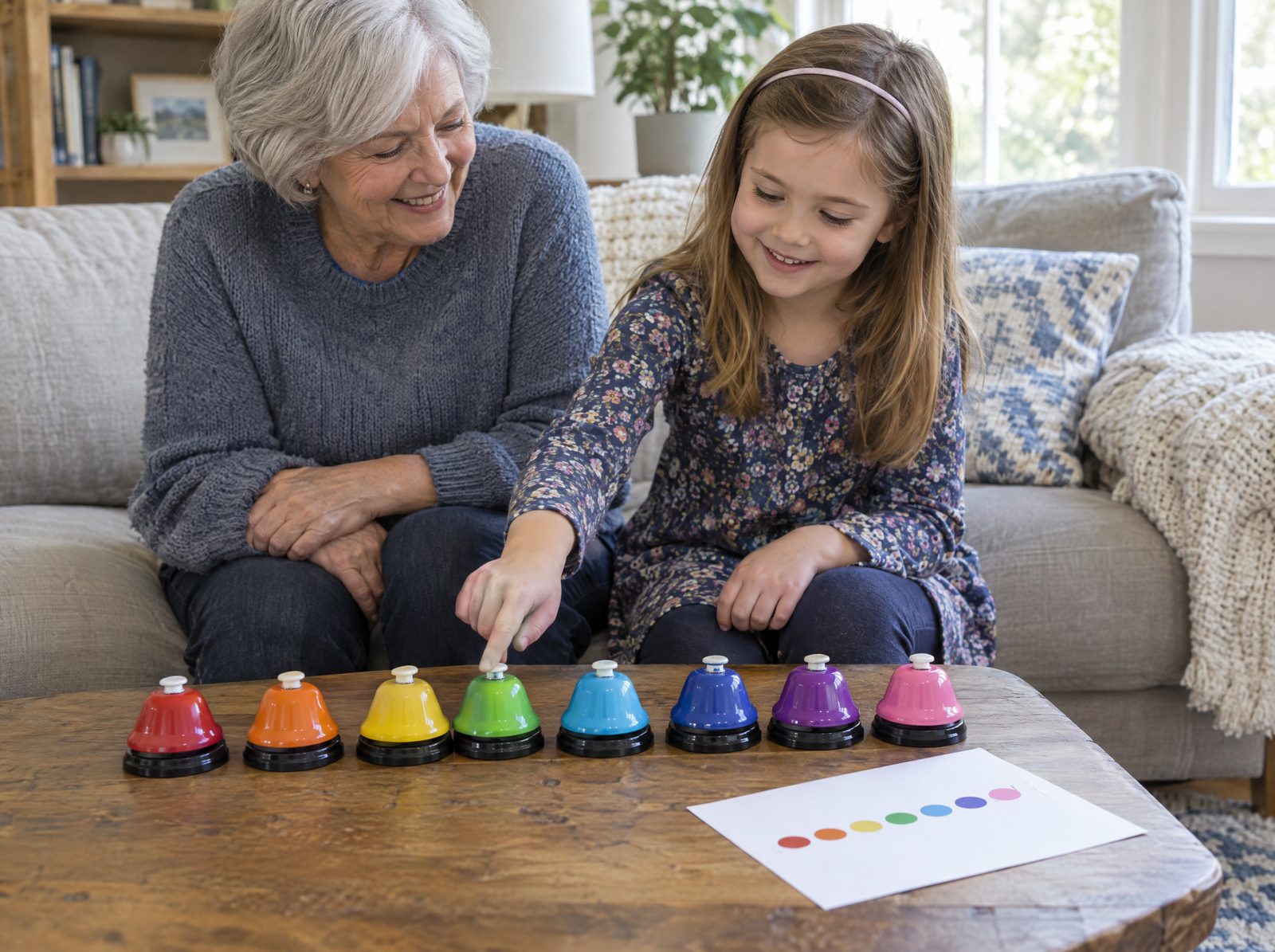
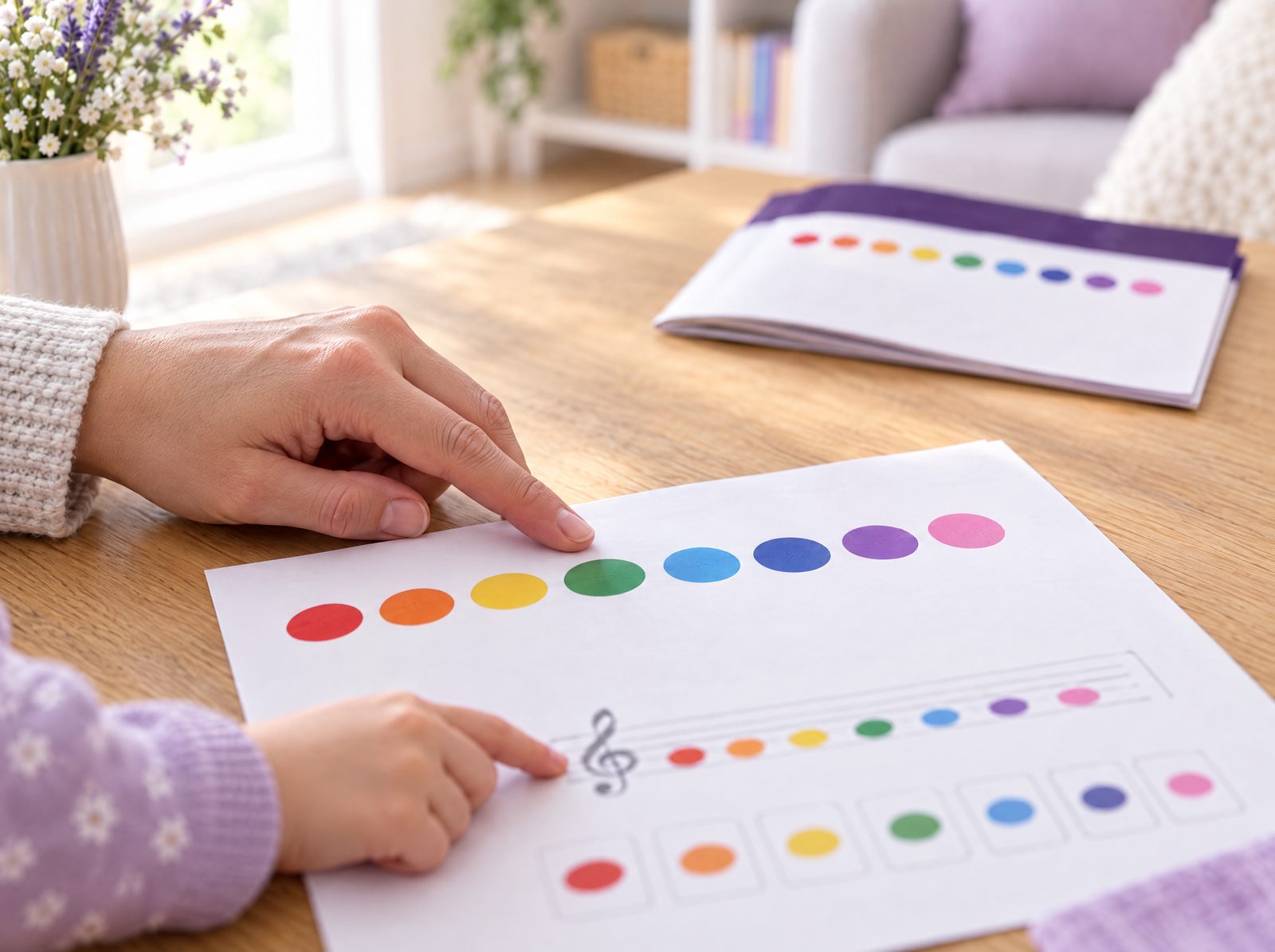
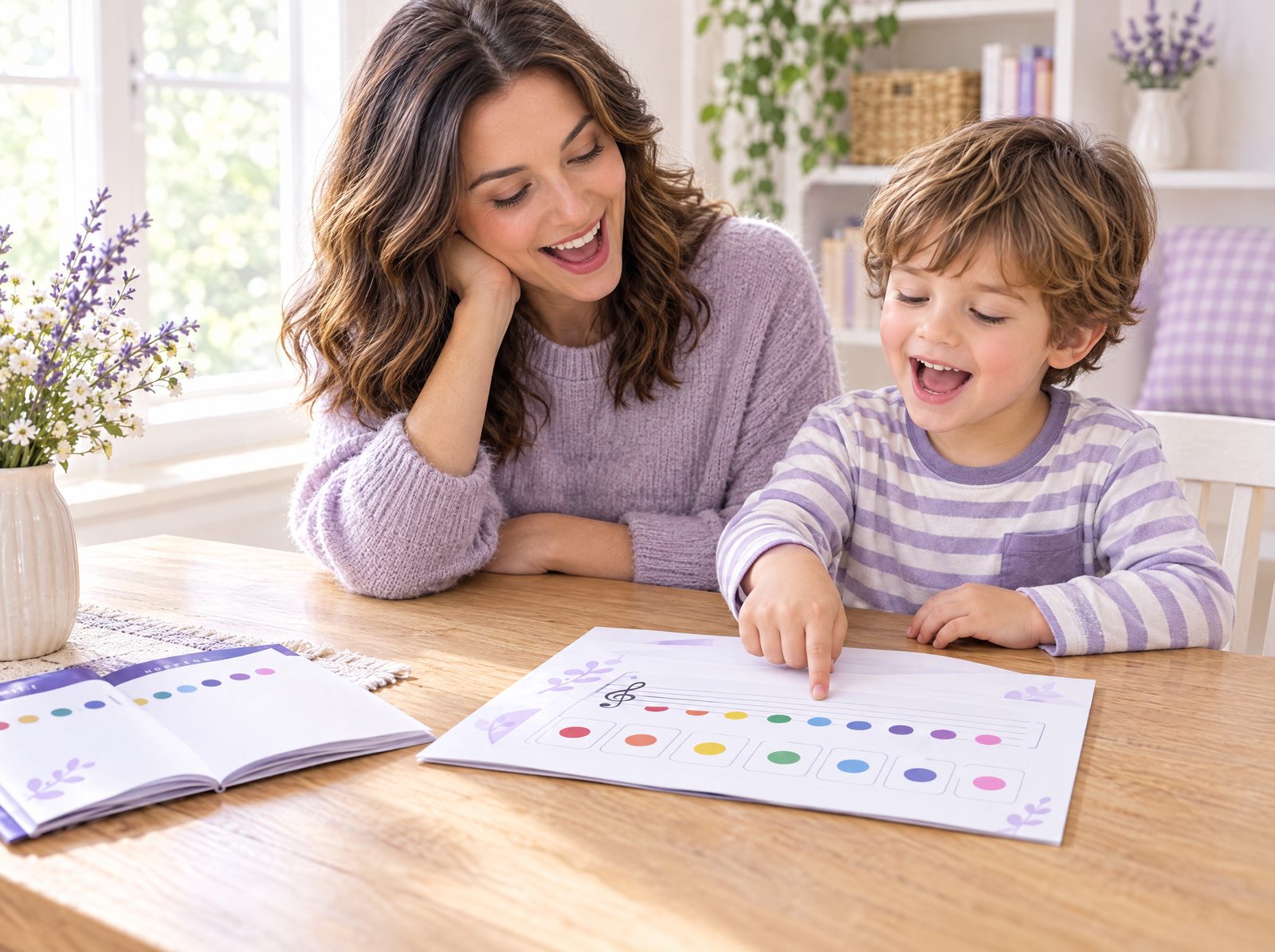
The whole kit runs on one idea a three-year-old already understands. The eight notes from C up to the next C each get a color, climbing in rainbow order: C red, D orange, E yellow, F green, G light blue, A dark blue, B purple and high C pink.
C
D
E
F
G
A
B
C
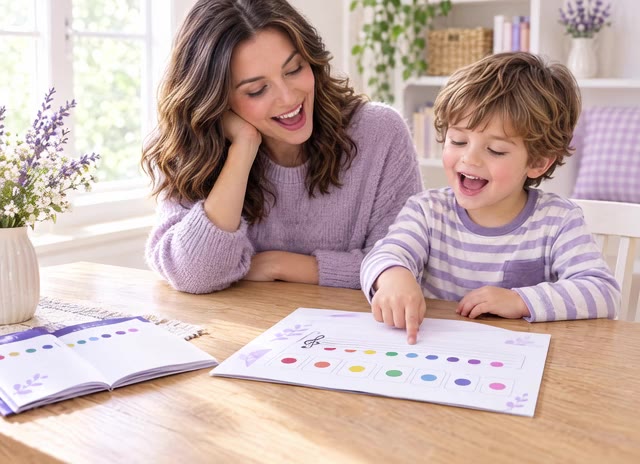
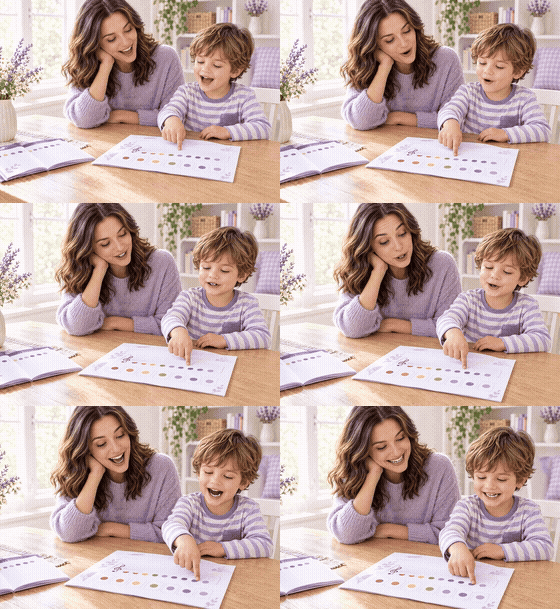
See the tune. Every song page shows each syllable with its letter and its color. Your child points to the colors while you sing, which is the first step from hearing music to seeing it.
Play with what you have. If you own a color-coded 8-note set in rainbow order with red as C (desk bells, a xylophone, a glockenspiel or handbells), it matches straight away. A different color order or a toy keyboard? The kit shows three ways to label it with tape or a paper strip.
No instrument at all? It still works. Every song can be sung, pointed to, clapped and moved to. The Large-Print Rainbow Note Key on your wall becomes the instrument.
Letters when they are ready. Every song also has a large-print, letters-only page, so children who are starting to read letters can follow the tune without the colors.
From printer to music time in four steps
1
Print the key and the schedule. Read three short sections of the Grown-Up Guide, print the Large-Print Rainbow Note Key and put it on the wall at your child's eye level.
2
Pick Day 1. The 4-Week Starter Schedule names one song and one game or activity for each of 20 sessions, five a week.
3
Run a 10-minute session. Hello song (1 minute), today's song (3 minutes), one game (5 minutes), goodbye song and count the pieces back (1 minute).
4
Color a star. Mark the session on the Star Chart. After 20 sessions, your child gets the Music Star Award to color and keep.
Everything inside The Note Hoppers Music Play Kit
One printable PDF of 167 pages in six parts, plus a contents section and a Sources list. Page numbers below are the pages of the PDF.
Part 1. Grown-Up Guide (pages 5 to 22)
Eleven short chapters for you, the grown-up: Welcome, Grown-Ups; The Rainbow Note Key, with a Large-Print Rainbow Note Key for the wall and a ladder page to fill in; Color Your Instrument (three ways to label bells, bars or a keyboard); How to Run a 10-Minute Session, with a "say it like this" script; Singing When You Do Not Read Music; Five Ways to Play Every Song; Printing, Cutting and Storing; Safety for Grown-Ups; Gentle Sounds; the 4-Week Starter Schedule (20 sessions); and What This Kit Is and Is Not.
Part 2. The Rainbow Songbook (pages 23 to 66)
20 songs, two pages each. The song page shows the words split into syllables, one letter per syllable and the color of each letter, plus where the song comes from, how it feels and which notes to put out. The next step page has the letters only in large print, three ways to play, a big kid challenge, a grown-up tip and a checklist.
11 original Note Hoppers songs: Hello, Note Hoppers; Rainbow Ladder; Hop, Bunny, Hop; Raindrop Song; Stomp and Tiptoe; Four Little Bells; Sun Up, Moon Down; Busy Bee Hum; Sleepy Moon; Clean-Up Song; Goodbye, Note Hoppers.
9 traditional tunes in the US public domain, published between 1761 and 1914: Twinkle, Twinkle, Little Star; Mary Had a Little Lamb; Row, Row, Row Your Boat; London Bridge; plus new Note Hoppers words to old tunes in Chug Along, Little Train; Are You Hopping?; Snowflake Song; Join the Music; and Close Your Eyes.
Easiest first: Snowflake Song uses 3 colors and Mary Had a Little Lamb uses 4.
Part 3. Music Games (pages 67 to 117)
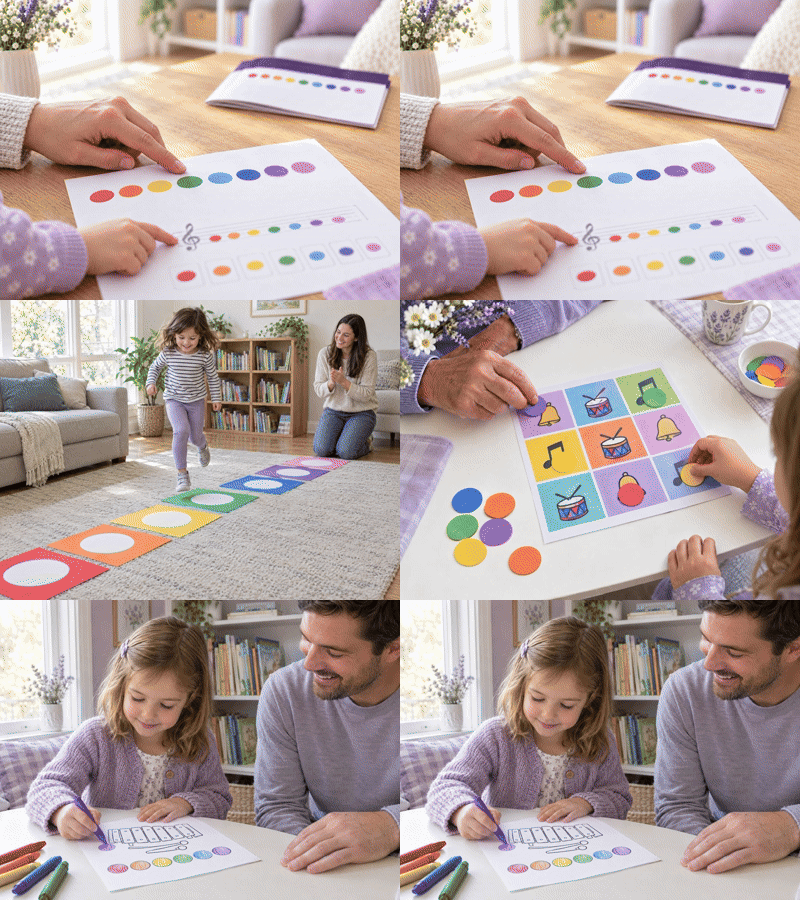
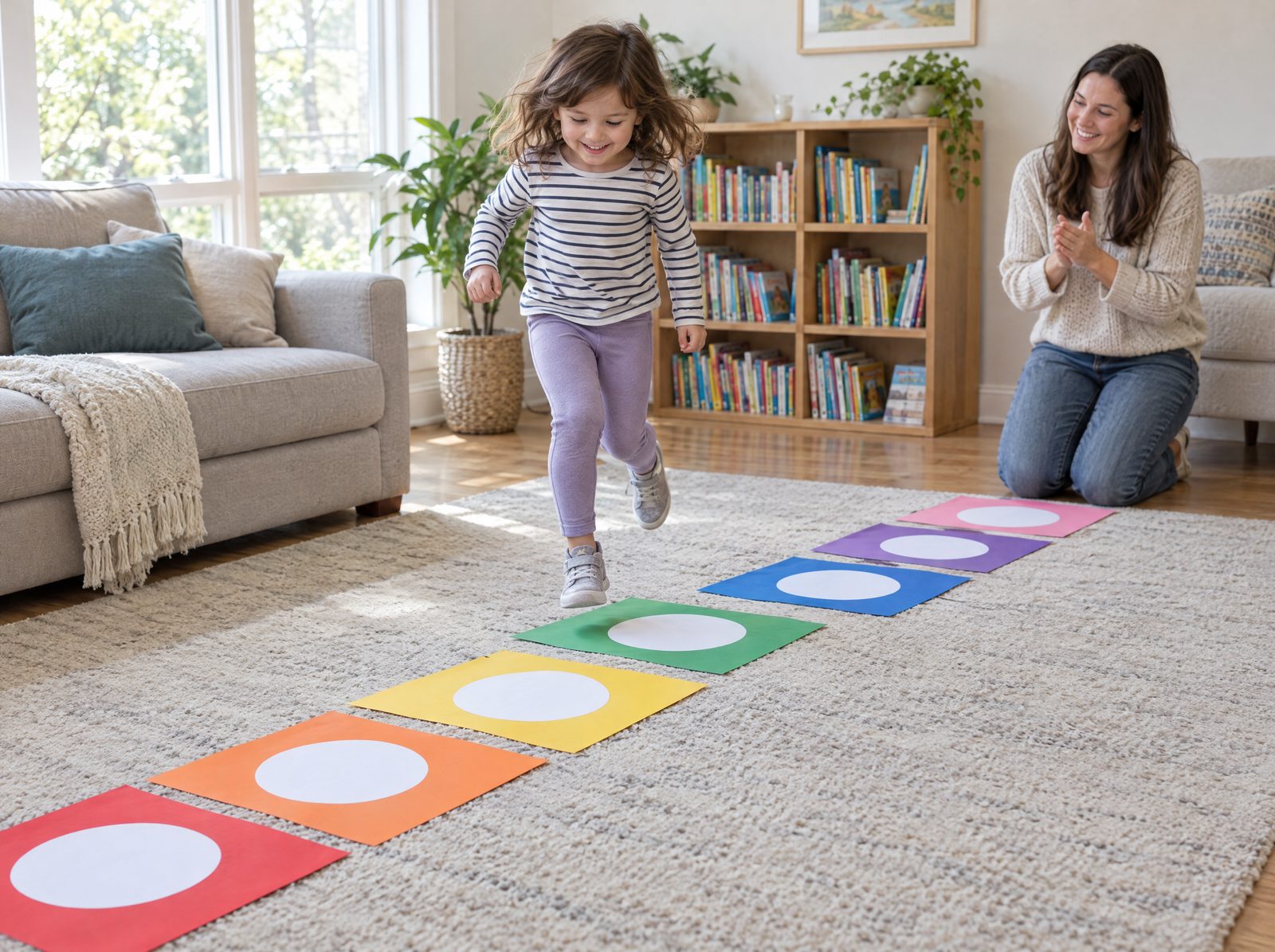
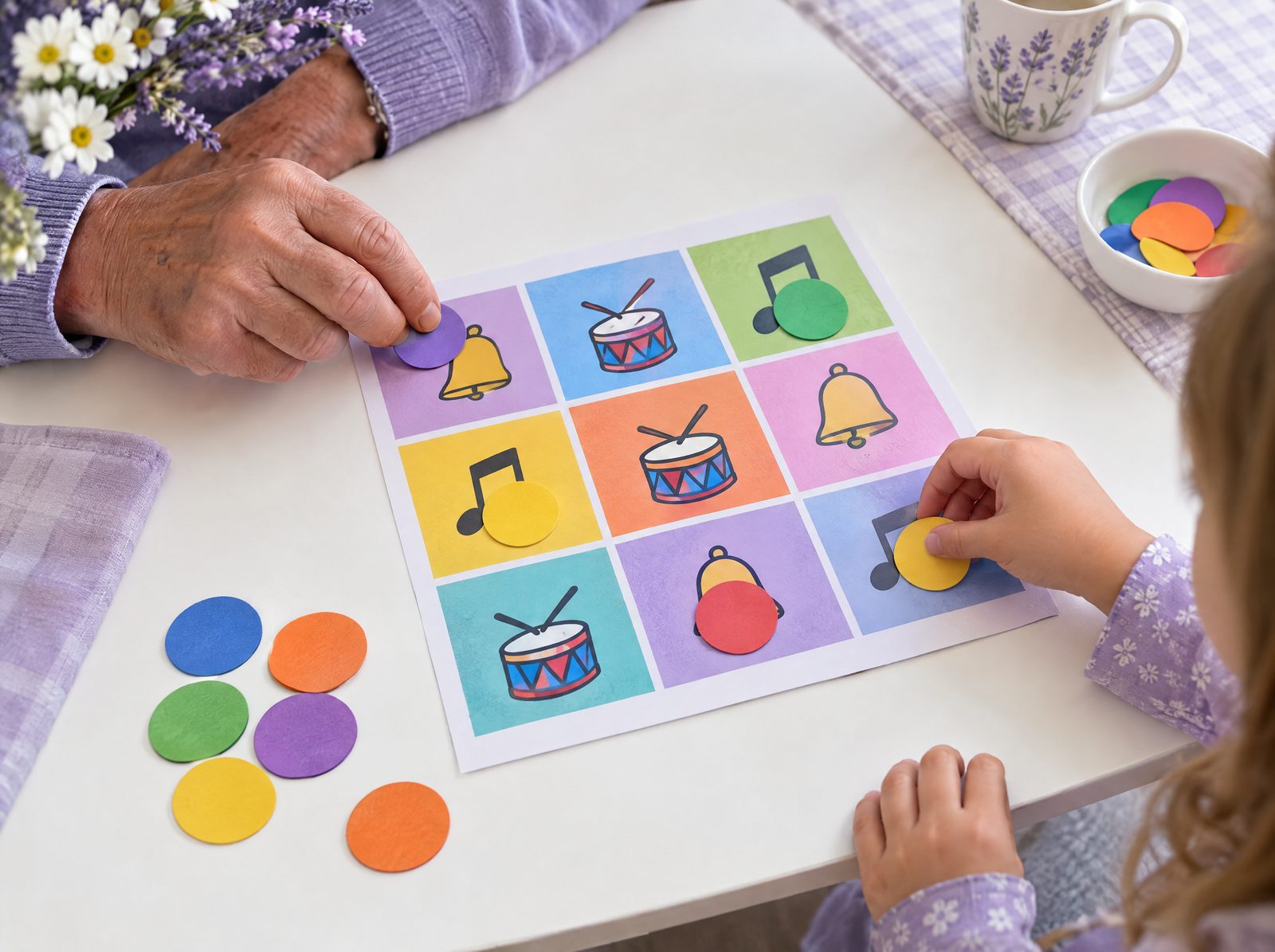
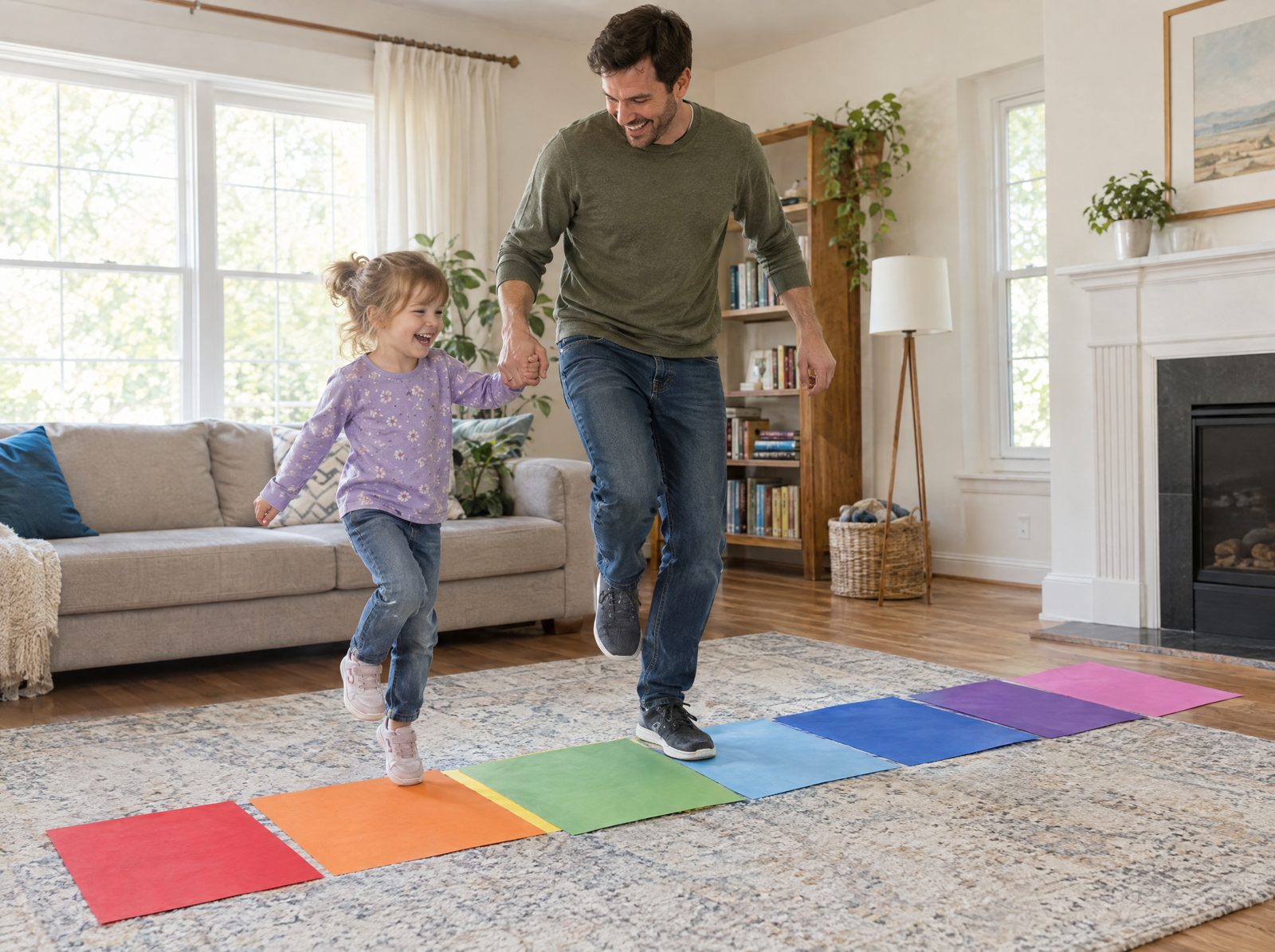
15 games, each with a rules page, a tag for ages, players, time and grown-up help, a "make it easier" or "make it harder" version, and its printables: Rainbow Note Bingo (6 boards and calling cards), Note Twins Memory Match (16 cards), Rhythm Race (a 30-space board and 24 rhythm cards), Instrument Families Sort (4 family mats), Loud and Soft Hop (2 mats), Pick and Play, High and Low Ladder, Hop the Rainbow (8 floor mats), Freeze and Shape (12 shape cards), Name That Hum (20 song cards), Too Loud? (a volume ladder), Echo Me (12 echo cards), Rainbow Dominoes (21 tiles), Sound Story (a story page) and Conductor Says (9 conductor cards). A Paper Pieces page gives you big paper tokens and player pieces.
Part 4. Flashcards (pages 118 to 130)
72 cards in 4 sets of 18, six to a page: Set A Instruments, Set B Rainbow Notes and Patterns, Set C Music Actions and Set D Feelings in Music, with five quick card games.
Part 5. Activity Pages (pages 131 to 161)
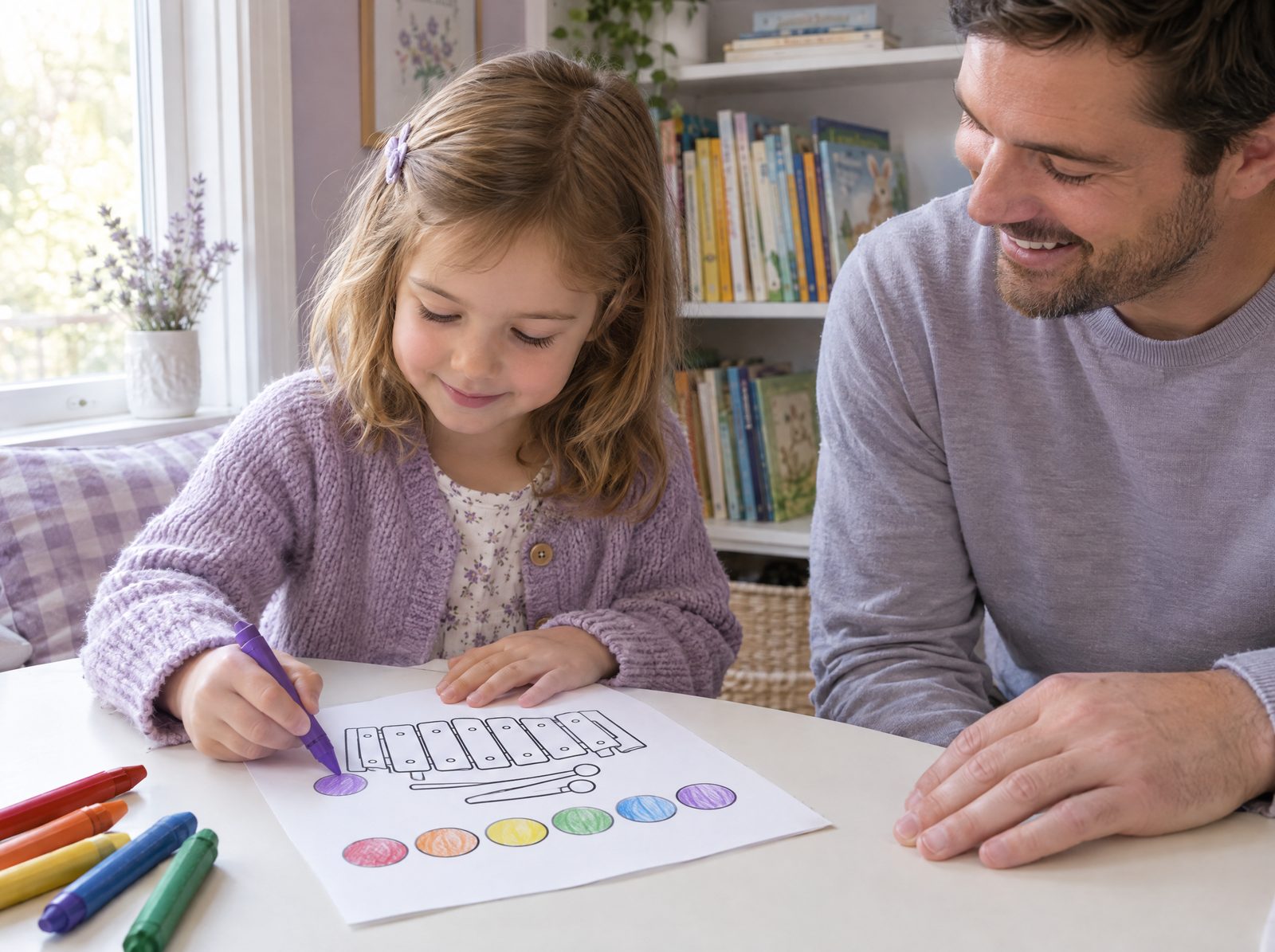
30 pages for quiet time: meet each of the 8 notes (trace, color, sing, find), build the Rainbow Ladder, color by note for three songs, matching notes and instruments, loud or soft, high or low, fast or slow, three "draw what you hear" pages, invent an instrument, a sound hunt at home, a listening walk, write new words, make a rainbow tune, count the claps, finish the pattern, how does the music feel and my music page.
Part 6. Progress Pages (pages 162 to 165)
A Song Checklist for all 20 songs, a Star Chart with 20 boxes, the Music Star Award (a fun award, not a certificate) and a What Next? page.
Sources (pages 166 to 167)
The safety, hearing and song history references the kit follows.
A Tuesday with Note Hoppers
It's Day 3 of the schedule. Before breakfast you glance at the page: Twinkle, Twinkle, Little Star and Game 6, Pick and Play. Nothing to cut today, because Pick and Play uses the Music Actions flashcards you cut on Sunday.
After lunch you sit on the living room rug. You sing Hello, Note Hoppers and your child waves on the first two words, just like the song page suggests. You open Song 12. The colors come in pairs, so you say "red, red, light blue, light blue" while your child taps the dots with one finger. If you have bells, you put out only the six colors the song uses, so there are fewer mix-ups.
Then the game. Your child pulls a card from the bag: hum. You both hum the first line. The next card says freeze. Lots of giggles. Five minutes go by fast.
You sing Goodbye, Note Hoppers, count the cards back into their envelope with the Clean-Up Song, and your child colors one star on the chart. Ten minutes, start to finish, and tomorrow's song is already on the schedule.
Is this kit a good fit?
It's for you if:
You care for or teach children ages 3 to 7 and want short, screen-free music time.
You don't read music and want songs you can learn from letters, colors or a hum.
You own a color-coded 8-note set, a toy keyboard or no instrument at all.
You like a plan: 20 sessions laid out day by day, with a loop to keep going after Week 4.
You lead a small group, a homeschool co-op or a classroom circle and want games that work for up to about 12 children.
It's not for you if:
You want a music lesson program or a substitute for a music teacher.
You are looking for therapy or a program to address a specific need.
You want video lessons or an app. This is a printable PDF.
You need a physical product shipped to you. Nothing is mailed, and no instrument is included.
You want pop songs from TV or films. The kit uses original songs and public domain tunes only.
Three ways to start music time
Starting from scratch
Free videos and scattered posts
The Note Hoppers Music Play Kit
A plan for each day
You build it
Different source every time
4-week schedule, 20 sessions
Songs you can see and play
The ones you remember
Mostly to watch and listen
20 songs with letters and colors
Works without an instrument
Depends on you
Often needs a specific one
Sing, point to, clap or move to every song
Games ready to print
None
Scattered, mixed formats
15 games with boards, cards and mats
Screen time during play
None
Yes, the screen is the activity
None after printing
Safety and gentle sound guidance
Up to you
Rarely included
Safety and Gentle Sounds chapters
Cost
Free, plus your hours
Free, plus your hours
$37 one-time
Ten minutes of music, ready on paper
Print the key, open Day 1 and sing. 167 pages, $37 one-time.
Want more? Three optional add-ons
You can add these on the next screen, before checkout. The kit is complete without them.
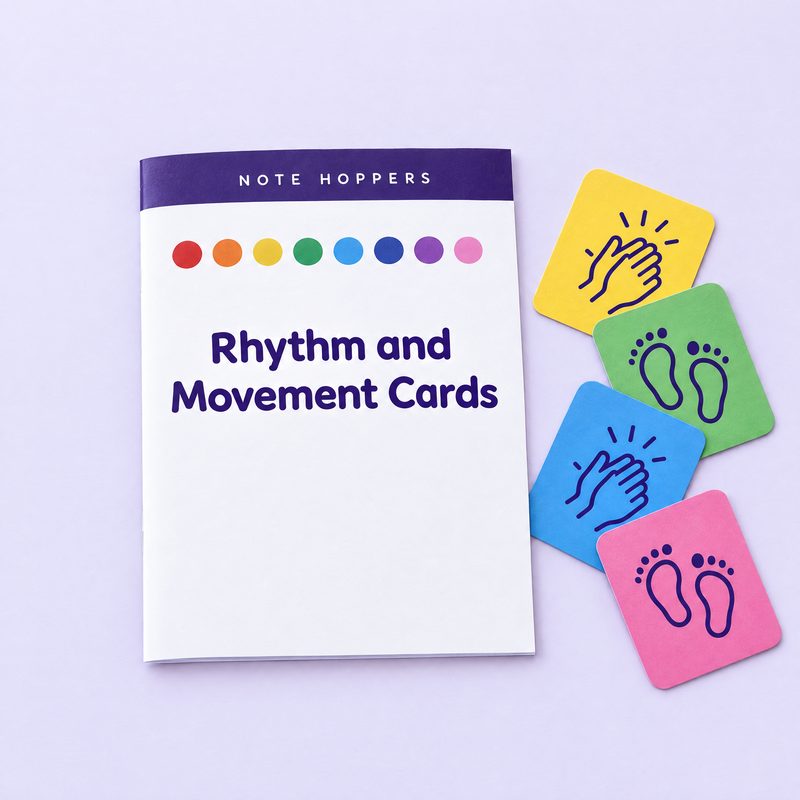
Rhythm and Movement Cards ($17)
48 rhythm cards in four levels, built from four say-it-out-loud beat words (HOP, FROG-GY, shh and LOOONG), plus 24 movement cards and 18 games (8 rhythm games and 10 movement and freeze games) for wiggly groups. 34 pages.
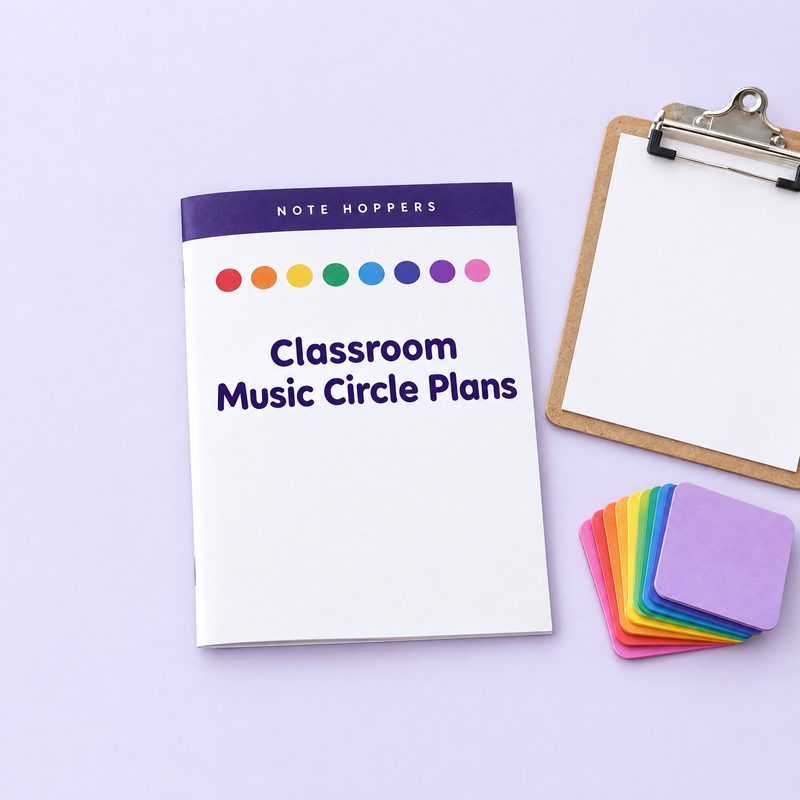
Classroom Music Circle Plans ($17)
36 ready circle plans of 15 to 20 minutes, one per week of a school year, in 9 units of 4 weeks. Each has a focus, materials and easier and harder versions, with a song bank, 12 circle games and planning pages. 38 pages.
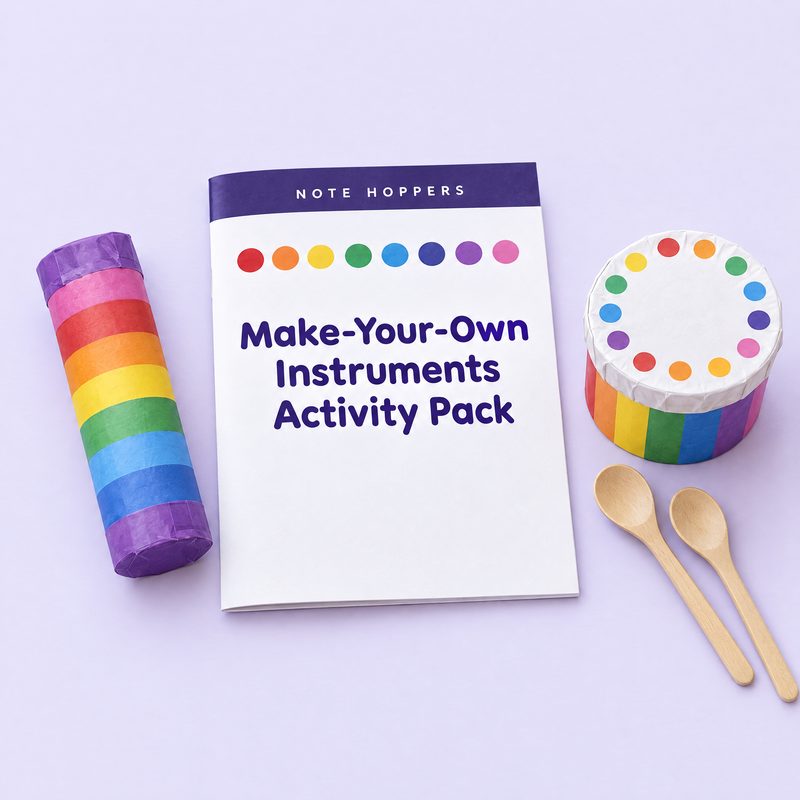
Make-Your-Own Instruments Activity Pack ($17)
12 adult-led builds from household items (shakers, drums, a box guitar, a rain stick, straw pan pipes and more), a grown-up safety guide, a sound hunt, a listening journal and a family band show. 27 pages.
Complete Bundle: all 3 add-ons for $22
You save $29.
Everything you get today
The Note Hoppers Music Play Kit: one printable PDF, 167 pages
Grown-Up Guide with the Rainbow Note Key, session shape, singing tips and safety: pages 5 to 22
The Rainbow Songbook: 20 songs, 40 song pages: pages 23 to 66
15 Music Games with every board, card and mat: pages 67 to 117
72 Flashcards in 4 sets: pages 118 to 130
30 Activity Pages: pages 131 to 161
4-Week Starter Schedule, Song Checklist, Star Chart and Music Star Award
Print again anytime for a new school year, a new sibling or a worn-out card
Today: $37, one-time
Pay with card, Apple Pay or Google Pay. Secure checkout by Stripe.
14-day money-back guarantee
Try the kit for 14 days. If it isn't right for your family or your class, email productadvice.info@gmail.com with your order email within 14 days of purchase and we'll refund your purchase of The Note Hoppers Music Play Kit. The refund goes back to your original payment method. No forms and no hoops.
How we made this kit
Original songs, public domain tunes. The 11 Note Hoppers songs were written for this kit. The 9 traditional tunes were all published between 1761 and 1914 and are in the public domain in the United States, where works first published before 1931 are now public domain. We checked each tune's publication history in published references, and every song page says where its tune and words come from.
Fitted to 8 notes. Every tune was arranged to fit the eight notes from C to high C, so it plays on a basic 8-note set. When a tune is shortened or one note changed, the song page says so.
Play first. The kit follows published early childhood music guidance: play-based singing, chanting, moving, creating and improvising, with a grown-up who notices, joins in and models joyful music making.
Safety from official sources. Small-parts guidance follows the US Consumer Product Safety Commission. Gentle sound rules follow the American Speech-Language-Hearing Association's guidance on noisy toys. Emergency steps use Poison Help 1-800-222-1222 and 911.
Honest scope. No promises about skills or development. The goal is shared, joyful music time. The full list of sources is printed at the end of the kit.
Safety first, for grown-ups
A grown-up does all the cutting, laminating and hole punching. Children ages 5 to 7 can help with safety scissors on straight lines, with you watching, if you are comfortable with that.
Game pieces are printed paper, cut big. Paper pieces and any small items you add (buttons, beads, beans, coins, counters) are for ages 3 and up. If a child under 3 is in the room, put them away and play the songs and movement games instead.
Count pieces in and out of their envelope after every game, and store them up high.
The kit never uses magnets, button batteries, balloons or cords longer than 12 inches.
Keep sounds gentle: instruments stay in front of the body and away from ears, soft taps first, one instrument at a time in a group.
If a child may have swallowed something harmful, call Poison Help at 1-800-222-1222 (free, confidential, 24 hours a day). If a child is choking, can't breathe, collapses or has a seizure, call 911.
This is a play kit for families and classrooms. It is not a music lesson program, not therapy and not medical or professional advice. If you have questions about your child's hearing or development, talk with your pediatrician. If your child receives therapy services, their teacher or therapist can help you adapt a game.
Questions grown-ups ask
Your first music time can be today
Print the Rainbow Note Key, open Day 1 and sing. 20 songs, 15 games and 167 pages, ready in minutes.